


.png)

.svg)
.svg)
.svg)
4 Best Health Trackers to Wear with a Classic Watch
I first ran into this problem when I tried wearing a bulky fitness tracker alongside my mechanical watch during the workday. Little did I know what I signed up for. The tracker’s screen kept lighting up next to the watch dial, and the extra band made the wrist feel crowded, especially under a shirt cuff.
That’s when I realized the problem wasn’t just physical space. A classic watch has a visual hierarchy, and most wrist-based fitness trackers disrupt it by adding a second screen and a distinctly sporty presence to the same wrist.
Naturally, I tried moving the smartwatch to the other wrist. That fixed the space issue, but it created a new one: it looked strange in meetings and drew more attention than I expected when gesturing or shaking hands. At that point, most wrist-based trackers stop feeling usable, regardless of how good their health features are.
So what’s left? Devices that either don’t sit on the wrist at all or stay inactive enough that they don’t announce themselves visually. Once you accept those constraints, the field narrows quickly. The four that follow are the ones that actually hold up in practice.
Find Your Tracker in Seconds
Since you have already decided to keep your classic watch on your wrist, the next step is choosing a tracker that fits your style, lifestyle, and core priorities in everyday use. This quick picker should help cut your research time in half.
- If you love classic watches but want health tracking that fits your style and avoids the gadget look → Circular Ring 2
- If you’re looking for a wrist strap built around strain, recovery coaching, and performance analytics → WHOOP
- If you’re after a slim wrist band with a small display for quick stats, and general fitness tracking → Garmin Vivosmart 5
- If you prefer jewelry over wearables and want a simple wellness tracker → Lumia Earrings 2
How These Trackers Pair With a Classic Watch
Before getting into each tracker on its own, it’s useful to see how they stack up side by side.
1. Circular Ring 2
Best for style-first watch wearers who want a clean wrist, but still need health tracking that stays invisible

- Price: $349 (and the gold or rose gold cost roughly $549)
- No subscription for the 13+ core health features required
If you wear a classic analog watch and rule out anything that needs wrist space, a screen, or frequent interaction, the Circular Ring 2 ends up as the top choice simply because it is one of the very few options left that does not break those constraints.
It’s an elegant titanium ring that comes in several finishes, including obsidian black, silver, gold, and rose gold, and its classic design suits both men and women. Weighing about 2-3 grams, it’s as light and comfortable as a wedding band. On a cuffed-shirt office day, you keep your analog watch on your wrist, and the ring sits neatly on your finger without crowding your wrist or adding extra bulk under your sleeve.
The ring tracks heart rate, HRV, sleep, stress, and activity in the background, so you don’t have to interact with it during the day. And once the 14-day calibration period is complete, Circular’s AI coach Kira begins offering more personalized recommendations based on your patterns to help you improve your daily habits.
For example, Kira might notice your recovery scores drop after poor sleep and suggest an earlier bedtime, or prompt breathing exercises when your stress levels spike. Other notable perks include medication reminders, menstrual cycle/fertility tracking for women, and built-in workout tracking (it can log runs or rides with GPS route mapping via your phone).
2. WHOOP Strap
Best for training-focused athletes who prioritize recovery and strain analytics over aesthetics
- Annual Membership Tiers: One ($199/yr), Peak ($239/yr), and Life ($359/yr)
- No upfront hardware cost (included with membership)
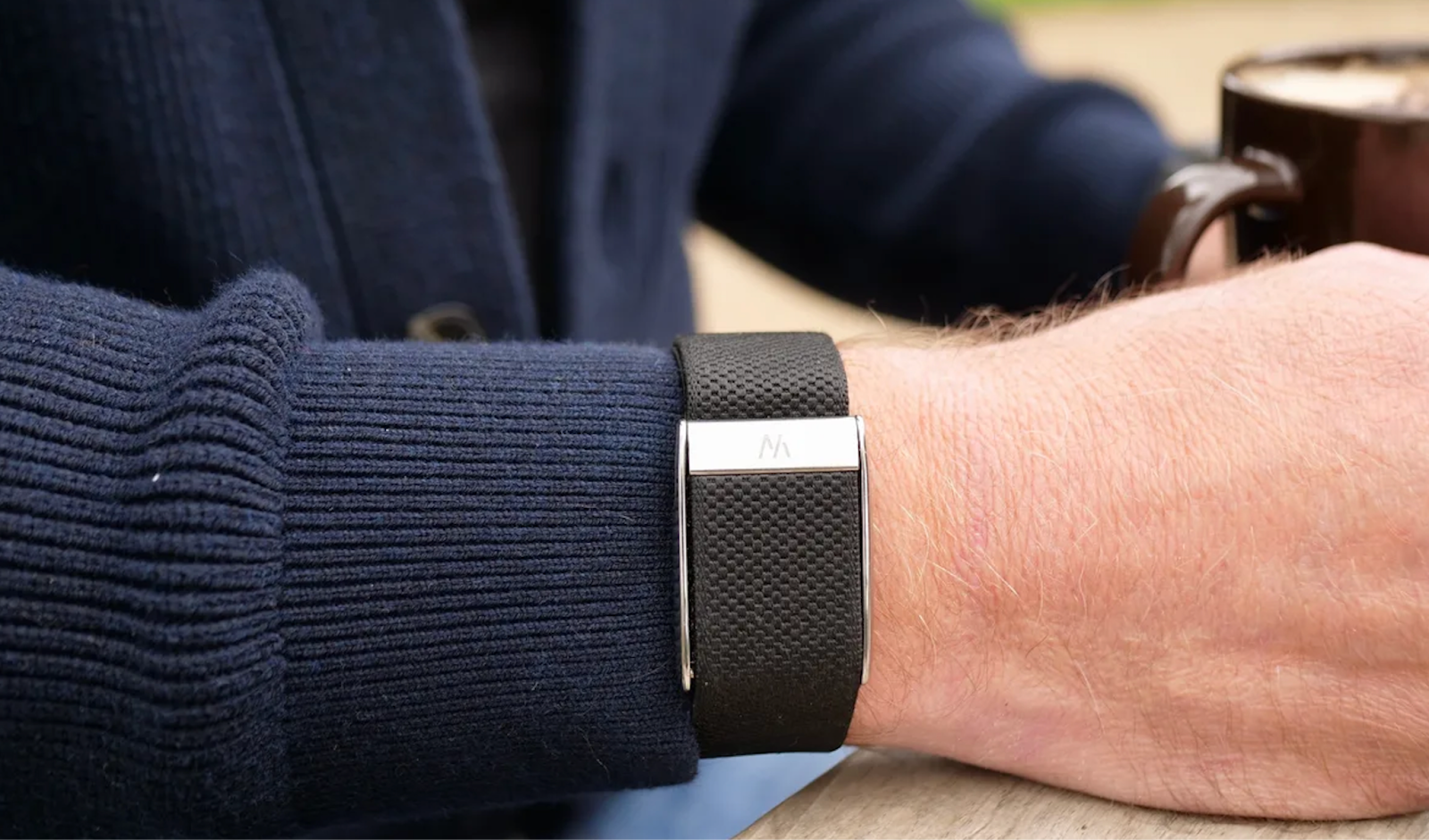
The WHOOP strap’s biggest advantage in this context is stealth. There’s no screen, so it looks like a simple fabric band from across a conference table. Some users even joke you can pass it off as a plain bracelet.
You do everything through the app, so you check your scores after the fact instead of glancing down at your wrist mid-meeting. In day-to-day use, the sensor lights are not meant to be a constant “look at me” feature either. They usually go dark when the strap is not reading skin contact.
For health tracking, WHOOP is built for 24/7 monitoring with a heavy focus on recovery and training readiness. On the hardware side, WHOOP says the 5.0 generation reaches 14+ days of battery life.
As for women’s health, WHOOP includes hormonal cycle and pregnancy insights that connect cycle phases and pregnancy changes with patterns you see in recovery, sleep, and related signals.
3. Garmin Vivosmart 5
Best for budget-minded users who want reliable heart rate, stress, and sleep tracking in a slim band with a small display
- Price: $149.99
- Subscription: No
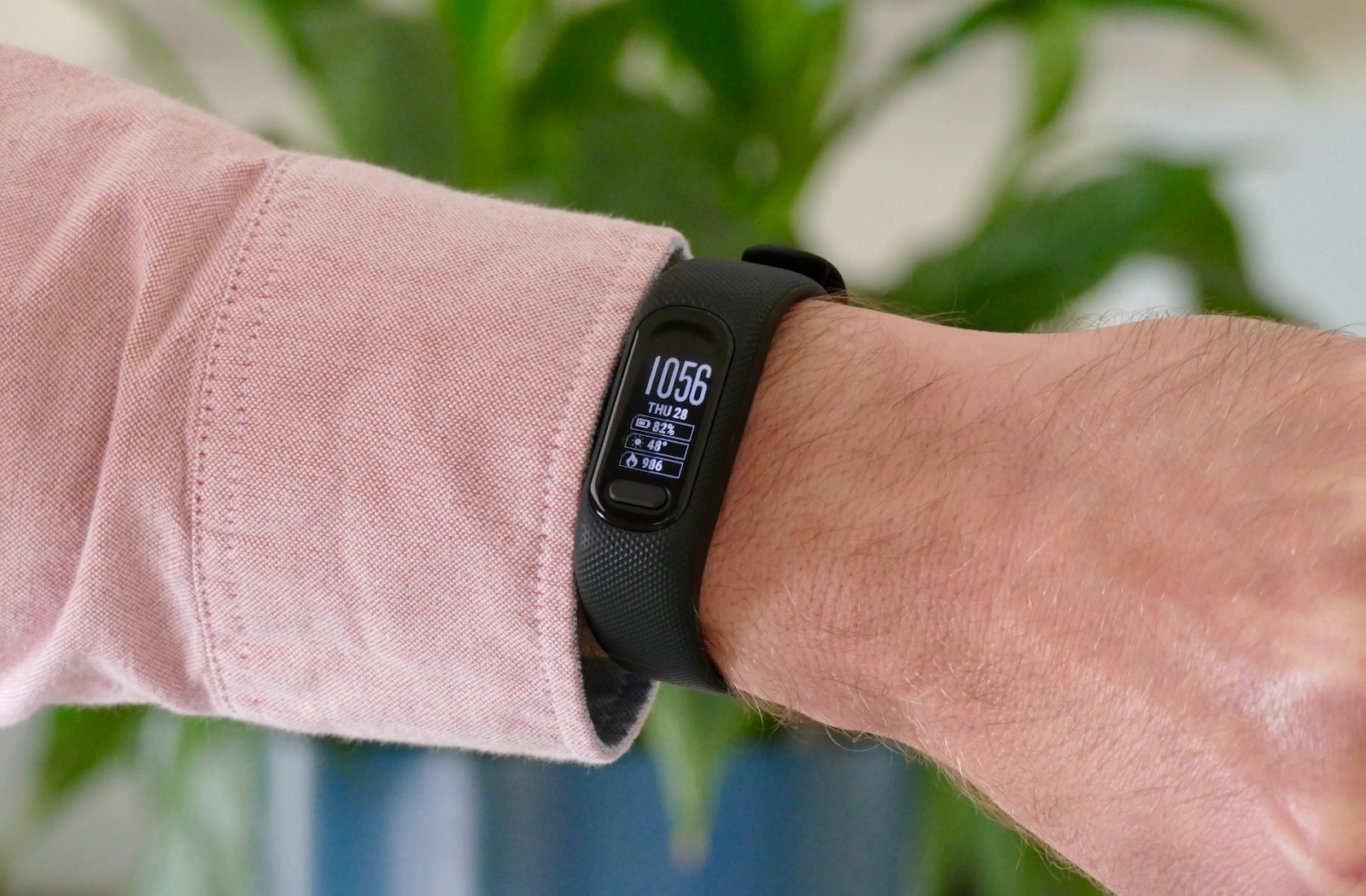
On the wrist, the Vivosmart 5 reads as a simple silicone bracelet, not a second watch. Most of the time, the screen is barely noticeable. The small 0.8-inch OLED display is monochrome and stays off unless you intentionally wake it. What you usually see is a narrow, dark strip on the wrist. If you like to wear long sleeves, it disappears completely under the cuffs. With short sleeves, it is still visible, but it does not pull attention the way a color smartwatch does.
As for the screen, it purely exists for quick checks. You can look at stats or notifications briefly, then let it go dark again. Notifications can be turned off, and Garmin’s software does not aggressively wake the display, so random flashes are rare.
In the background, it handles continuous health and activity tracking. Heart rate runs all day, with alerts for unusually high or low resting values. It also tracks blood oxygen, respiration rate, and stress patterns. Garmin’s Body Battery score is calculated in the companion app and uses recent sleep, stress, and activity data to show how depleted or recovered your body is.
4. Lumia Earrings 2
Best for early adopters who want completely wrist-free tracking and are curious about circulation and energy trends
- Price: ~$249 retail (pre-order availability)
- Subscription: ~$9.99/mo for full metrics access
Just like the Circular Ring 2, Lumia 2 removes health tracking from the wrist completely. Given that you are committed to wearing a mechanical or luxury watch daily, there is no stacking, no second band, and no screen competing with your dial.
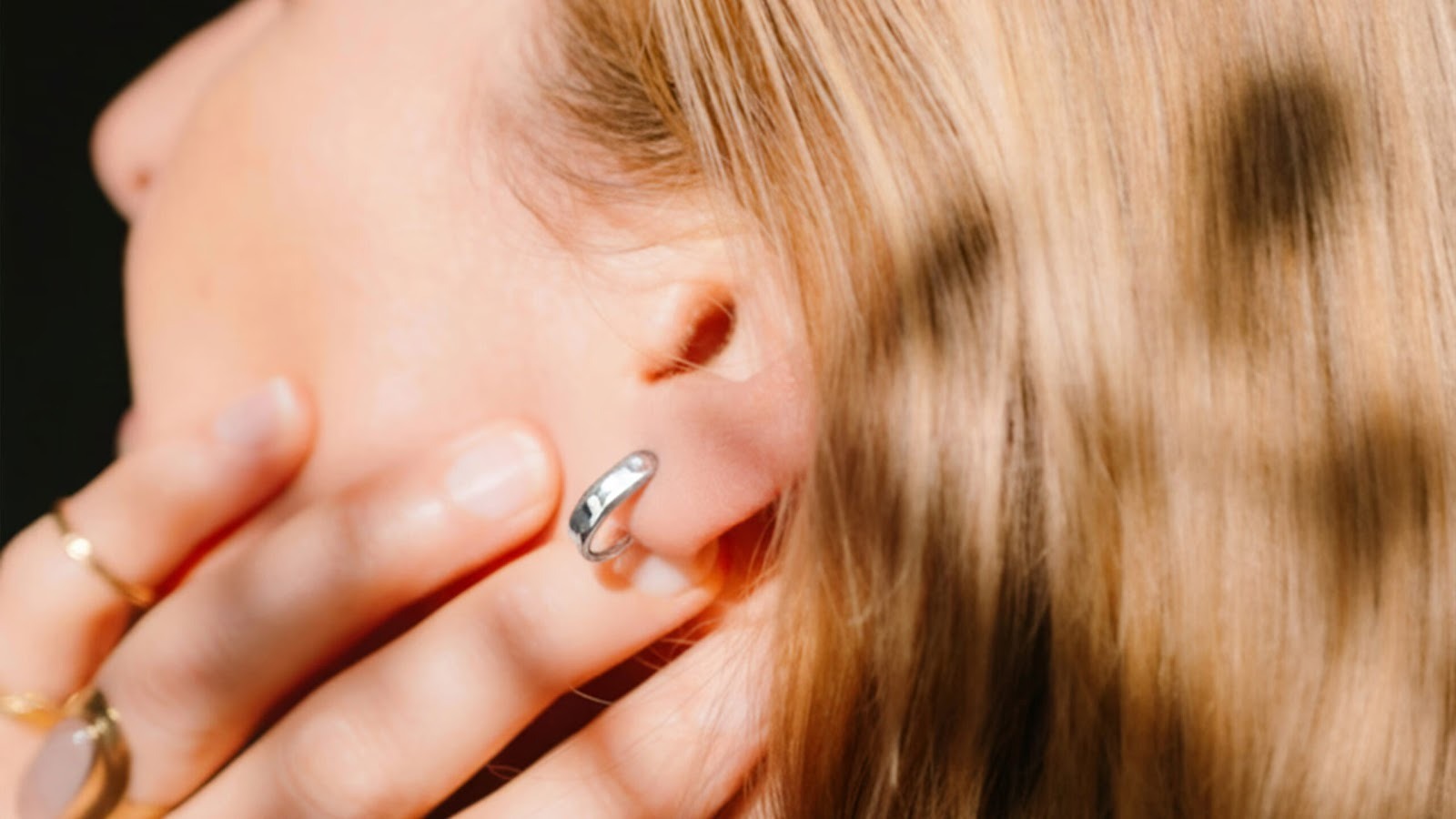
The Lumia 2 is a health tracker built into the backing of a stud earring. Only one of the earrings contains the sensor module—which is right behind the lobe, and the other one balances it out visually.
Technically speaking, Lumia 2 uses near-infrared optical sensing behind the ear to measure blood flow patterns. On top of that, it also tracks heart rate, heart rate variability, sleep stages, body temperature trends, and menstrual cycle data.
And with the companion app, you’ll get interpreted insights around energy, recovery, and mental fatigue. That said, this is not a medical-grade device, and the technology is still relatively new in consumer wearables.
---
Final Thoughts
All our picks let you keep your mechanical or luxury watch on your wrist without sacrificing health data. They quietly log your body’s performance from the shadows, and display your health stats in the companion app. With these discreet health trackers, you truly can have the best of both worlds: timeless style on one hand, timely health insights on the other (or on your finger!). It’s a level of convenience and design harmony that watch lovers even a decade ago could only dream of. With the right tracker companion, you’ll stay classy and informed, every step of the way.
